How to Play the Piano - Introduction to Piano Playing!
Home » Piano Notes » How to Play the Piano
Can't wait to start learning to play the piano? Are you looking for beginning piano lessons? Great! You have arrived to the right place. This is the ultimate starting point both for those who wish to learn to read piano notes, or learn to play piano by chords.
Why? Because everybody who wants to learn how to play the piano should learn how the piano works and acquire some basics first. Later on I'll direct you to the piano section that fits the path you'll choose to take.
| Click here if you haven't signed toPiano Playground, our free E-zine yet. Make sure you do that in order to get the username and password codes for the piano sheets and tabs we provide for each piano tutorial and lesson (And I'll keep you posted with the new piano lessons and videos on our site). |
 O.k. Let's Continue.
Do you know how the piano works? Let's have an inside look for a moment.
Understanding how the piano creates its unique sound will help us to learn to play piano in a beautiful manner by undertsanding how the piano creates its sound.
First Acquaintance
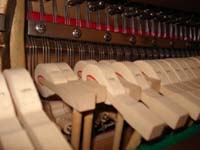
The simplest story you'll hear about the piano is this.
When you play a key, a hammer inside the piano is hitting a string.
That string produces a sound. A tone.
So just like a hammer is falling to a nail we fall to the key.
Then we stick to it for a desired time, and leave it in the right timing.
During our piano lessons some subjects might seem a bit more complicated from time to time, but remembering this simple concept will always keep you on the right track.
Dynamics
Dynamics are signs of loudness and softness. When you fall slowly and gently to the key, the tone you produce is soft and relatively quiet. That is called Piano in musical terms. Musical terms often derive from Italian. When you fall faster to the key by activating more weight you create a louder tone called forte.

Now the first made pianos were called Piano-Forte in the past since they had a unique ability to produce a wide range of in volume and sound like no other instrument could before. Today we simply name the instrument - "piano".
When we play piano we should be searching for the secret to creating beautiful music. It's more complicated then reading the notes or playing a melodies by ear. We wish to give something beautiful and meaningful to those who listen to us. Even if we're the only one who listen to ourselves :).
In fact before we play a key we always have to imagine the sound and decide how soft or loud we want it to be. Keep this point of view in mind and you will see later on that you get lots of answers on how to create a unique sound that is simply yours.
For now, lets say that we're going to play with a clear tone (Mezzo forte or mf -
meaning relatively strong),not to loud and not to soft.
Remember, the question is not only about how to play the piano. It's about how to play the piano well!

What Do You Need?
Usually when studying piano I recommend a few books that lead us through the way but since we're going to study on-line together we can actually do this a little bit different.
Along with the piano lessons existing in Piano-Play-It I highly recommend that you purchase the Rocket Piano Ultimate Piano Learning Kit. Their logical and gradual on-line piano lessons and their detailed piano course will help you to understand what you might miss in our piano lessons. Click Here to Check Out the Rocket Piano Ultimate Piano Learning Kit Now!
O.k. we're done here. You're all set to go the next step on learning how to play the piano, where you'll learn about the piano keys.